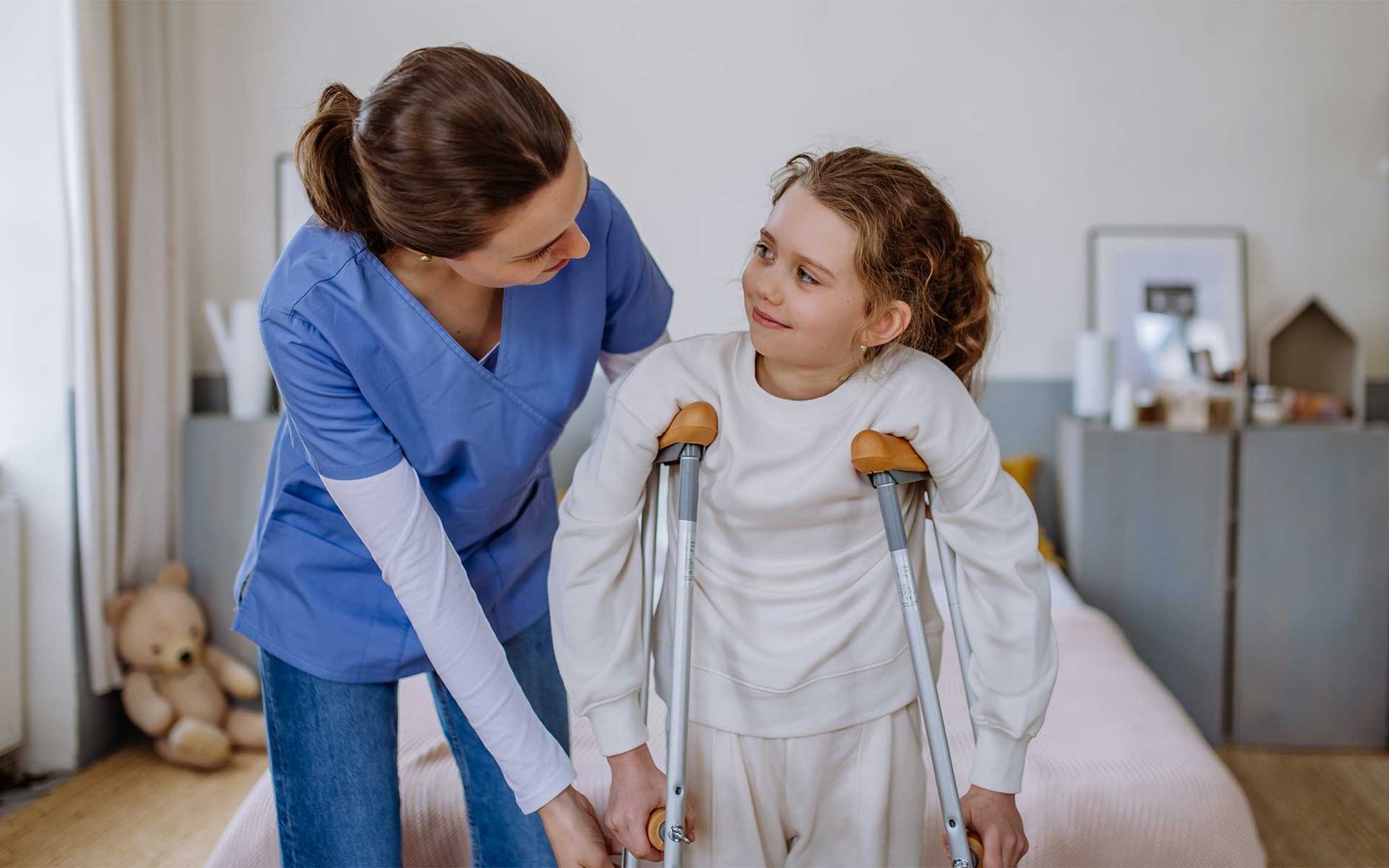
A patient qualifies for skilled nursing care when they have a medical condition that requires treatment or monitoring from a licensed nurse, such as a Registered Nurse (RN) or Licensed Practical Nurse (LPN). This care must be medically necessary and ordered by a physician.
In simple terms, if a child or adult needs medical care that cannot be safely provided by an untrained caregiver, they may qualify for skilled nursing services.
For families in Georgia, skilled nursing care can often be provided at home through Medicaid, private insurance, or programs such as the urlGeorgia Pediatric Program (GAPP)https://carewithinreachkids.com/gapp/.
In this guide, you will learn:
Skilled nursing care is medical care provided by a licensed nurse, such as an RN or LPN, for a child or patient with ongoing health needs. This care is usually ordered by a doctor and may include treatments, monitoring, and support that cannot be safely handled by an untrained caregiver.
Unlike personal care, which helps with daily tasks like bathing, dressing, or feeding support, skilled nursing focuses on medical needs such as breathing support, medication administration, tube feeding, seizure monitoring, and other complex care at home.
Skilled nursing care may include:
These services help medically fragile children and patients stay safer, more stable, and more comfortable while receiving care at home.
A patient qualifies for skilled nursing care when a doctor confirms that licensed nursing services are medically necessary to manage a health condition safely at home. For children, this often means the child has complex medical needs that require regular care, monitoring, or treatment from an RN or LPN.
To qualify, the patient usually must:
Medical necessity is the main factor. This means the nursing care must be needed to protect the patient’s health, prevent complications, and support safe care at home.
Many children and patients may qualify for skilled nursing care when they have a medical condition that requires regular treatment, close monitoring, or support from a licensed nurse at home.
Eligibility depends on the level of care needed, not only the diagnosis. For example, one child with a condition may need basic support, while another child with the same condition may need tube feeding, seizure monitoring, oxygen support, or other skilled nursing services.
Children may qualify if they have conditions such as:
Patients often qualify when they depend on:
A child with a feeding tube, seizure disorder, and daily medications may qualify because these tasks require nursing skills.
Families may need skilled nursing care at home when a child or loved one has medical needs that require regular treatment, close monitoring, or support from a licensed nurse.
Common signs include:
If daily medical care feels difficult to manage safely, in-home skilled nursing may help your family get the support, guidance, and clinical care needed at home.

The qualification process usually begins with a physician. The doctor reviews the patient’s diagnosis, medical needs, daily care requirements, and safety risks to decide if skilled nursing care is medically necessary.
If the patient needs care that should be provided by a licensed nurse, the doctor may write orders and help create a plan of care. A nursing assessment and medical records are then often used to support approval through Medicaid, GAPP, or insurance.
Doctors and nurses may submit:
This documentation explains what services are needed and how often they should be provided.
Yes, some children in Georgia may qualify for skilled nursing care through the Georgia Pediatric Program, also known as GAPP.
GAPP supports eligible children under age 21 who have Georgia Medicaid and medical needs that require in-home nursing care or personal care support. Approval usually depends on the child’s diagnosis, physician orders, nursing assessment, and medical necessity.
This program can help children receive care at home instead of relying only on hospital or facility-based support.
A child generally must:
Care Within Reach helps families understand eligibility and complete the process.
Yes. Medicaid often covers skilled nursing services when the care is medically necessary.
Coverage may include:
The exact number of approved hours depends on the patient’s medical condition and physician recommendations. Families must complete prior authorization and periodic reassessments to maintain coverage.
The number of nursing hours varies from one patient to another. Factors that affect approval include:
Some patients may receive only a few hours each week. Others may qualify for overnight or extended nursing shifts.
Skilled nursing care and personal care services are not the same. Skilled nursing focuses on medical care that must be provided by a licensed nurse. Personal care focuses on support with daily living tasks at home.
Skilled Nursing Care | Personal Care Services |
Provided by an RN or LPN | Provided by trained caregivers or personal care aides |
Helps with medical treatments and monitoring | Helps with bathing, dressing, grooming, and daily routines |
Usually requires physician orders | Usually based on daily support needs |
Covered when medically necessary | Based on functional needs and care plan |
Care Within Reach also offers Personal Care Services for families who need non-medical support at home.

Skilled nursing provides medical care from licensed nurses, such as an RN or LPN. Assisted living provides housing and help with daily tasks, such as meals, dressing, bathing, and medication reminders.
The main difference is the level of medical care. Assisted living is usually for people who need daily support but do not need ongoing clinical treatment. Skilled nursing is needed when a patient has medical needs that require nurse-led care, monitoring, or treatment.
For children and medically fragile patients, in-home skilled nursing is often more appropriate than assisted living because the care is built around medical needs at home.
No. Skilled nursing is not the same as assisted living. Skilled nursing provides medical care from licensed nurses, while assisted living provides daily support in a residential setting.
A patient who needs tracheostomy care, feeding tube support, ventilator care, seizure monitoring, or other clinical services usually needs skilled nursing care instead of assisted living.
For Care Within Reach, this section should connect back to in-home medical support, not facility-based care.
Memory care is usually not considered skilled nursing. Memory care communities are designed for individuals with Alzheimer’s disease or other forms of dementia.They provide structured supervision, safety support, and help with daily routines.
Memory care becomes skilled nursing only when the resident also needs medical services that must be performed by licensed nurses.
Registered nurses need both clinical and communication skills. Important nursing skills include:
These skills help nurses provide safe and effective care at home.
The most important skill of a nurse leader is sound clinical judgment supported by strong communication. Nurse leaders must:
Good leadership improves patient outcomes and builds trust.
Skilled nursing care at home helps children and patients receive medical support in a familiar setting. It can make daily care safer, more organized, and easier for families to manage.
Patients can receive care in a place they know, surrounded by family and familiar routines.
The nurse can focus on the patient’s specific medical needs, care plan, and daily changes.
Regular monitoring may help families notice changes earlier and reduce the risk of avoidable complications.
Parents and caregivers can receive guidance, education, and support while caring for their loved one at home.
Skilled nursing care can help patients stay at home while receiving the medical care they need from trained professionals.
Applying for skilled nursing care in Georgia usually starts with a medical need and a doctor’s order. The process may include a physician referral, nursing assessment, medical records review, Medicaid or insurance approval, and a final care schedule.
Start by speaking with your child’s or loved one’s doctor. Explain the medical needs you manage at home, such as medications, feeding tubes, seizures, breathing support, wound care, or frequent monitoring.
The doctor will review the patient’s condition and decide if skilled nursing care may be medically necessary.
If skilled nursing care is needed, the doctor may provide a referral or written orders for nursing services.
These orders explain what type of care is needed, why it is needed, and how often the patient may need support from a licensed nurse.
A nurse will usually complete an assessment to understand the patient’s daily care needs.
This may include reviewing medications, medical equipment, mobility, feeding needs, breathing support, safety risks, and the level of care needed at home.
Medical records are then collected and submitted to Medicaid, GAPP, or private insurance when required.
This may include the diagnosis, physician orders, hospital records, medication list, treatment plan, and nursing assessment. Strong documentation is important because approval is based on medical necessity.
After the paperwork is submitted, Medicaid or insurance reviews the request. If approved, the authorization will usually show the type of care covered and the number of nursing hours allowed.
Approved hours can vary based on the patient’s condition, safety needs, and required medical support.
Once care is approved, a qualified nurse can begin services at home.
The nurse follows the care plan, provides medical support, monitors the patient’s condition, and communicates with the family and healthcare team when needed.
For Georgia families, Care Within Reach can help guide this process and explain the next steps for skilled nursing, GAPP, and in-home care support.
Care Within Reach supports children and families across Georgia with home-based skilled nursing and personal care services. Our team helps families understand the care process, prepare needed information, and receive support that fits the child’s daily medical needs.
Families choose Care Within Reach because of our:
Our goal is to help children with medical needs receive safe, consistent care at home while giving families guidance throughout the process.
A patient qualifies for skilled nursing care when they have a medical condition that requires support from a licensed nurse and a doctor confirms that the care is medically necessary.
For children, this may include needs such as feeding tube care, seizure monitoring, respiratory support, medication administration, or other complex medical care at home.
If you are not sure whether your child or loved one qualifies, the next step is to speak with a doctor and connect with a care provider that understands Georgia Medicaid, GAPP, and in-home nursing requirements.
Care Within Reach helps families across Georgia understand their options and take the next step toward safe, supportive care at home.
To learn more, visit our Contact Page and speak with our team about available services.
A patient qualifies for skilled nursing care when a doctor confirms they need medical care from a licensed nurse to safely manage a health condition at home.
Yes. Georgia Medicaid may cover skilled nursing care when the services are medically necessary and approved through GAPP or other Medicaid programs.
Conditions such as seizure disorders, feeding tube needs, tracheostomy care, and respiratory support often qualify for skilled nursing care at home.
No. Skilled nursing provides medical care from licensed nurses, while assisted living offers help with daily tasks in a residential setting.
Your child may qualify if they need ongoing medical care, close monitoring, and services that must be provided by a licensed nurse at home.
Let’s get started with your child’s personalized care plan. Fill out the form below, and our team will contact you within 24 hours.
Leave A Comment